
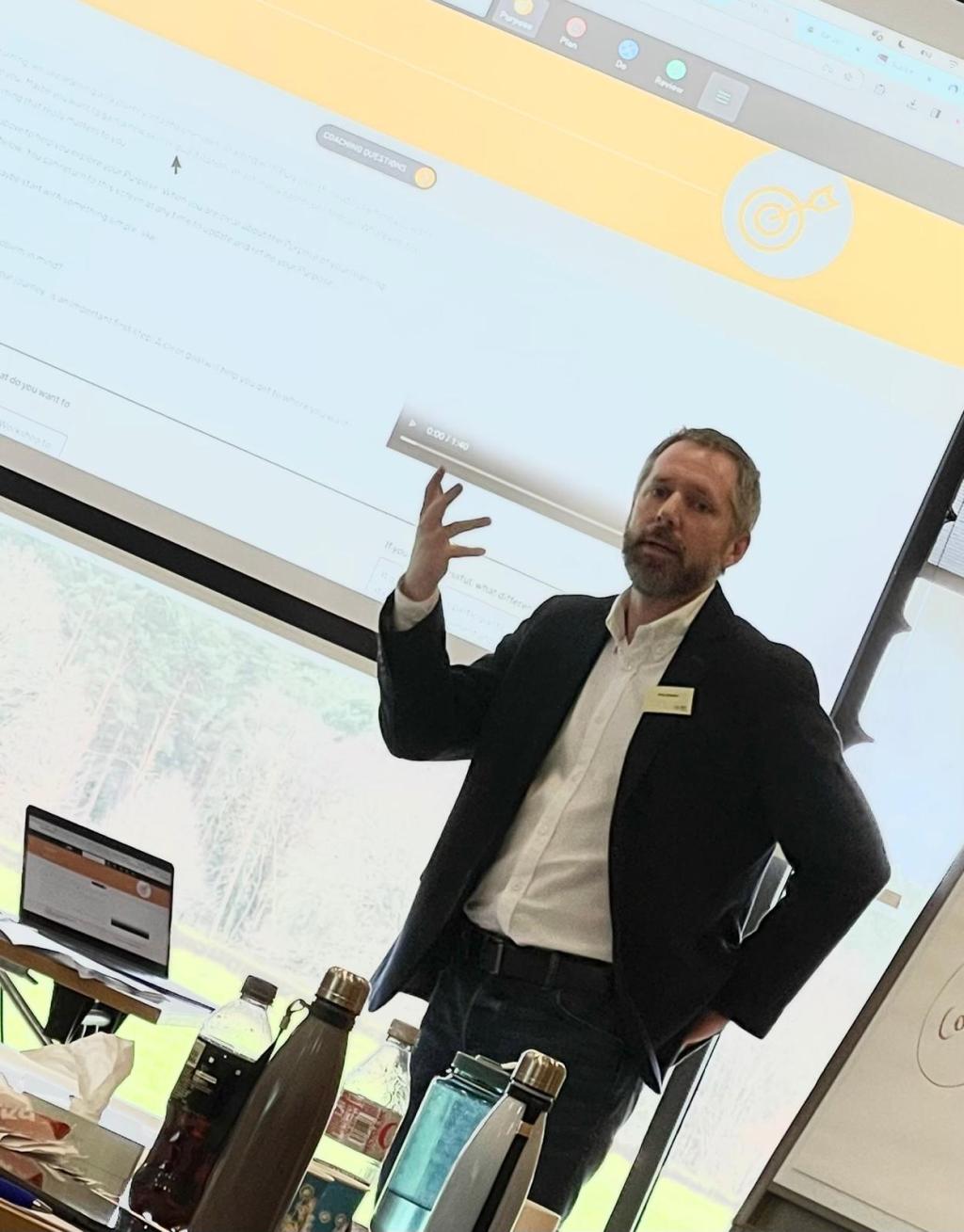
This is a post about identity, natural skill, and my lived experience as a trained facilitator. It is also about how facilitation links to Organisational Gardening (commonly known as organisational development).
Facilitation comes alive in a gathering of people that need to achieve a resolution based on conversation. It might be a decision (or many), a plan, or just a brain dump of ideas. Someone taking the role of facilitator, will “facilitate (make easy) the conversation for the group”.
In many ways I have been a facilitator, as a teacher, as a Scout leader, as an entrepreneur, as a consultant and/or team member. Initially, I didn’t name it “facilitation”, it was just something what I did, and seemed to be good at it, until I trained under the mentoring of an expert and certified facilitator (Beatrice Briggs). I took several courses with her and collaborated in different projects. I became really good and a sort of an expert, to the extent that my last company in Mexico “Ouitopía” was described as a “digital facilitation company”.
Where ever I was invited to support, collaborate and work people saw me as a facilitator. Trained and seasoned (never certified). I adopted that identity, because it set well with my personality, skills and qualities. A good listener, synthesiser of ideas, structured, but fast to change, group presence and public speaking, but also could blend in the background, I could see and understand all points of view without taking a side, calm in chaos and heated discussion.
My experience took me to facilitate conversations from Patagonia to the USA, from government meetings to the jungles of Mexico. I could be present in diverse settings, helping groups listen to each other and make decisions. I used facilitation as a trainer, as a tourism consultant and then as a hired digital (online and in-person) facilitator. I literally had a tool box full of pens and post-its to make any conversation interactive, those physical tools were applied under clear frameworks, liberating structures and methodologies. Any conversation and desired result, was possible with the right combination of exercises, practices and tools.
The Shed and a Toolbox
The shed is a small room or closet to put away all kind of tools and machinery you might need in the garden. In facilitation one would say that it is the place you put away the framework, methodologies and techniques to design and execute a workshop. Theory U and Liberating Structures are some of the general tools, or more specialised planning methodologies as Outcome Mapping or Dragon Dreaming. These go in the shed.
In the tool box I literally had dozens of pens, sticky notes, tape, coloured paper and any little gadget that allowed me to generate and capture the ideas of the group. If it was online a combination of videoconferencing software, virtual collaboration boards and interactive platforms supported remote conversations.
Facilitation as an Organisational Gardening Skill
Facilitation is a way of being and doing that is essential for organisational gardening. Being a facilitator is helping a group achieve a result through supporting the process of conversation, not by being the expert giving the answers. You design and facilitate the process with the people involved, and concentrate solely in the process, the content is generated and discussed by the participants. In organisational design and development the same role is important to adopt to help teams and teams of teams define how they want to work together more effectively.
A colleague of mine, involved in organisational development, calls her role as a strategic facilitator for change. This word “change” makes me think of so many tangents I can go to, but I will just say, in honour of my mentor Bea Briggs, that the first thing that came to mind was her organisation that started with the name of International Institute of Facilitation and Consensus, and then evolved to International Institute of Facilitation and Change (IIFAC).


Leave a Reply