
Introduction
In this post I want to explore the concepts of group and team coaching: what are they, what are their similarities and differences, and how could they be taken to the garden. I must admit I have used and applied group coaching at different stages of my recent professional career, and little regarding team coaching. Hence my need to explore a bit more to identify how I could progress on my understanding of the collective ways of coaching, and more specifically start reflecting on how to bring them into #coachinginthegarden.
Group Coaching
Group coaching is a dynamic and collaborative approach that brings together individuals who share similar personal or professional goals, such as leadership development, time management, or career advancement. Unlike traditional teaching, it is a facilitative process where a professional coach guides participants to learn from one another whilst working towards their own specific objectives. It is often described as a “hidden gem” because it allows for deep individual growth within a supportive cohort environment.
A primary advantage of this model is the power of peer learning and diverse perspectives. Participants benefit from the collective wisdom of the group, gaining insights from others who may be facing similar challenges across different departments or backgrounds. This environment fosters a unique sense of mutual accountability; when participants set goals and share progress with peers, they often feel a stronger collective responsibility to follow through on their actions.
From an organisational standpoint, group coaching is highly valued for its cost-efficiency and scalability. It allows more employees to access personalised development at a lower cost per person than one-on-one coaching. Furthermore, it helps build social connections and emotional intelligence, as the group dynamic naturally requires members to practise active listening, empathy, and conflict-resolution skills whilst pursuing their self-improvement aspirations.
My Experience with Group Coaching
I learned about Theory U back in 2020. I read the books from Otto Scharmer, attended some of the webinars of the Presencing Institute, and finally actively participated in their online programmes uLab 1 and 2 (in 2020 and 2021 respectively). Within this process, I understood and used the tools (resources) of the u-School, specifically the Case Clinic for Coaching Circles, and found it very useful.
First, in the context of uLab 1, and then I facilitated a monthly gathering with leaders of not-for-profit organisations in San Cristobal de las Casas, Chiapas, Mexico. Then I decided to move to the UK in 2022 to work for Konsileo, taking the role of Head of Organisational Development, and the first thing I did to support my professional transition was to invite a group of fellow OD professionals to a monthly virtual group coaching session. It was a small group spanning from NZ, Canada, Chile, Spain, and the UK, using the structure of the Case Clinic to put forward challenges we were facing in our organisations. During 2023 and 2024, I developed and facilitated three cohorts of virtual coaching programmes for founders and executive directors of NGOs based in Mexico, which combined 1:1 coaching, a training programme, and group coaching (again using the Case Clinic). Finally, one of my last experiences was to develop the group coaching programme for onboarding new Client Directors (brokers) at Konsileo, using the framework of Case Clinic but adapting it for our own performance framework, the Konsileo Success System (KSS).
The benefits as a participant have been countless: the safe space, the accountability, the challenge, the advice and support, and the learning from others when presenting a case or listening to a case. As a facilitator and group coach, I have seen value generated in each session for all the people involved. Value expressed in learnings, mentorship, and even friendships formed as the topics get deeper and deeper and touch the professional but also the personal facets of an individual.
Team Coaching
Team coaching is a professional intervention where the “primary client” is the whole team as a single entity, rather than the individuals within it. The process helps teams work together more effectively, align with their stakeholders, and operate within their wider organisational environment to maximise their collective potential. It is a long-term commitment involving multiple sessions designed to create lasting changes in how the team functions and delivers value.
Core frameworks, such as the “Five Disciplines,” emphasise that successful team coaching must address both internal dynamics and external connections. This includes “commissioning” and “clarifying” the team’s purpose, as well as “co-creating” better ways of working and “connecting” with the broader organisation. Advanced models now also focus on “Systemic Team of Teams” coaching, which breaks down silos and encourages collaboration between different interconnected team networks across a company.
The impact of team coaching is often measurable through improved productivity, strategic agility, and psychological safety. By fostering an environment where members feel safe to show vulnerability and provide robust feedback, teams can move beyond simple co-operation to high-performance collaboration. Organisations that adopt these systemic approaches report significantly higher economic impact and better long-term sustainability compared to those that rely on traditional hierarchical structures.
My Experience with Team Coaching
I haven’t studied a lot about Team Coaching as a concept and methodologies till now. I have applied my group facilitation training in team settings to support their strategic planning, and team development applying tools from the self-management literature such as Teal, Holacracy and Sociocracy; in topics such as role definition, decision making and meeting effectiveness. I have also used several of the Liberating Structures to design and delivery team processes. I have used the Business Model for Teams written by Tim Clark and Bruce Hazen who I trained with in 2018 to reflect on how individuals and teams contributed to the overall organisation’s purpose. So maybe I should say I have some experience, but I would like to explore new ideas such as Systemic Team Coaching from Peter Hawkins.
Similarities and Differences between Group and Team Coaching
Similarities
Both group and team coaching utilise a professional coach to facilitate growth and leverage the power of multiple voices in a single setting. They both aim to drive professional development, increase self-awareness, and enhance collective capability through a series of structured sessions. Additionally, both models prioritise accountability and peer support as central mechanisms for achieving lasting change.
Differences
The fundamental difference lies in the primary client and objective: group coaching focuses on individuals achieving their personal goals within a group, while team coaching focuses on the team itself achieving a collective purpose. In group coaching, members might not even work together outside the session, whereas in team coaching, the participants are a pre-existing unit that must collaborate daily to produce a shared output.
Furthermore, the scope of the intervention differs; group coaching is often centred on a specific shared topic or competency (like “executive presence”), while team coaching is systemic, often involving the team’s relationship with external stakeholders and its role within the wider organisation’s strategy. While group coaching is a powerful tool for scaling individual growth, team coaching is a foundational approach for organisational transformation and breaking down complex silos.
Imagining Group & Team Coaching in the Garden
As shared above, my experience with Group and Team coaching has been varied, and real, but never in the garden. Always in front of the computer mainly, although as I say that I remember that my coaching circle back in Mexico was organised by me in a beautiful venue called “Corazon de Jade” which was a typical colonial-style home with a walled garden maintained by a local not-for-profit organisation.
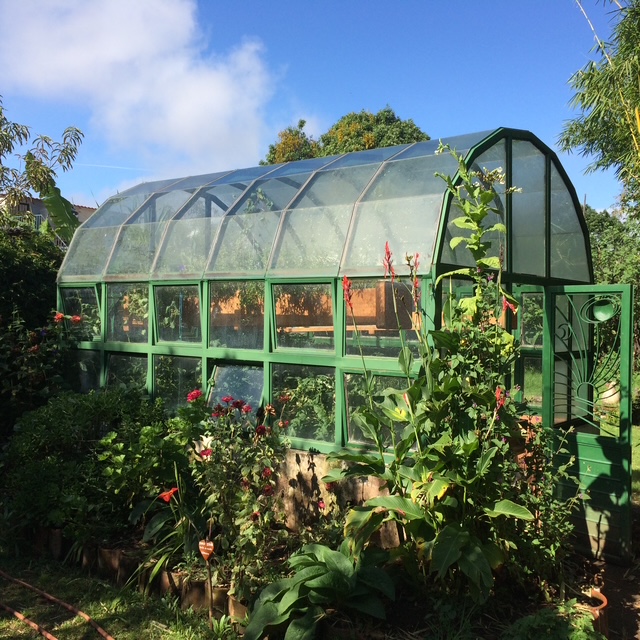
This takes me to think that group and team coaching can use a garden simply as a setting. A relaxing space surrounded by plants, the biodiversity attracted by the vegetation and depending on the weather an enjoyable sunny day or a chilly but welcoming cold morning (or evening). The context in itself would influence the state of the participants, and if you add herbal infusions and tasty natural nibbles, the activity can become experiential for mind, body and spirit. All this will positively contribute to the success of a coaching session amongst peers.
You can go a step further and invite the group or team to see the garden as a coach. What is the garden trying to teach us today? Considering the challenge brought up, what can the garden tell us about it or what is the question the garden would ask? Maybe, after listening to the shared challenge we can disperse in the garden for clues, inspiration, and ideas that come about as we let the issue settle and we ponder our contribution in the process of the Case Clinic. In team coaching looking at how the elements of the garden work together to solve a similar or comparable challenge that can provide new ideas or perspectives to the team issue or tension.
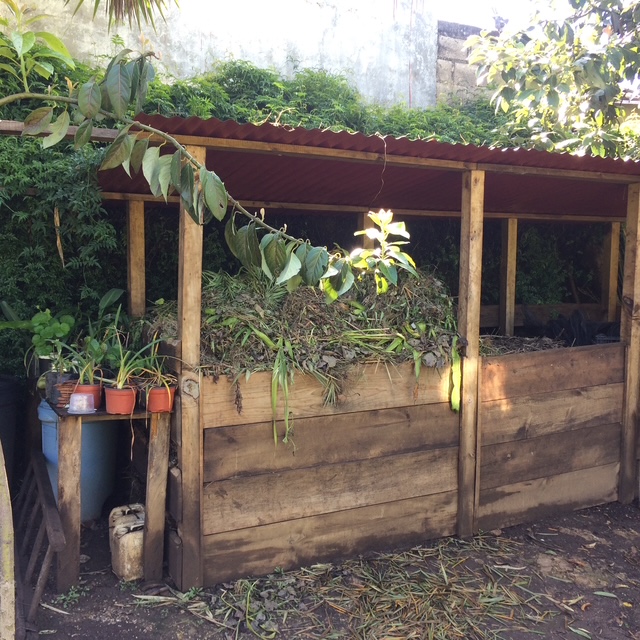
Finally, the idea that came to me while writing this post is that as a team (or group of peers) can collaborate in the garden on a specific chore (or set of tasks) as a team building exercise. Maybe a small half or full day project that could be the metaphor to our “work related problem or relationship building”. If there are things we must compost, then building a compost heap or giving maintenance to one can be a good way to reflect upon what to repurpose and give rise to new energy. If we have to cut off initiatives, some pruning in the garden teaches us the considerations we have to make while cutting or cancelling projects.
Summary
This post explores the concepts of group and team coaching, drawing distinctions between the two (where group coaching focuses on individual goals within a shared cohort, team coaching targets the collective effectiveness and systemic interaction of a pre-existing work unit). I share my personal experience with group coaching, particularly using Otto Scharmer’s Case Clinic framework, while acknowledging a desire to deepen my practice in systemic team coaching. The core idea is how to transpose these collective coaching methodologies into a garden setting, suggesting the garden can serve not just as a tranquil backdrop, but also as a powerful coach providing metaphors, inspiration, and hands-on, collaborative activities—like composting or pruning—to address professional challenges and foster teamwork.
Next Step
To apply the learning from this exploration, the next step could be to design and pilot a “Composting Challenge” half-day workshop for a small, pre-existing internal team facing recent organisational changes. This session could blend the structure of a Case Clinic for a specific team tension with a practical, collaborative garden chore (building or maintaining a compost heap) as a metaphor for repurposing old ideas and cultivating new strategies.
 The Organisational Gardener
Leave a comment