
I am a great fan of the “Liberating Structures” book (and tool box). As a trained and seasoned facilitator I find myself going back to them for inspiration or a reminder of how to design and lead a workshop or meeting. Obviously, I have my favourite choices and preference, and one of them stands out: the EcoCycle Planning.
“Analyse the Full Portfolio of Activities and Relationships to Identify Obstacles and Opportunities for Progress” is the short description of EcoCycle Planning in the Liberating Structures website.
EcoCycle Planning is designed to help groups and individuals map their full portfolio of activities and relationships to identify where progress is being stifled and where new opportunities exist. By plotting various projects and initiatives along a continuous loop of four developmental stages (birth, maturity, creative destruction, and renewal) participants can visually assess which areas are thriving and which have become trapped in rigidity or scarcity. This inclusive approach moves beyond traditional top-down strategic planning by involving everyone in the process, allowing for a collective “forest and trees” perspective that facilitates the pruning of obsolete practices and the prioritisation of resources for emerging ideas. Ultimately, the method fosters organisational agility and resilience by ensuring that creative destruction is embraced as a necessary precursor to growth and long-term sustainability.
EcoCycle as an Organisational Gardening Tool
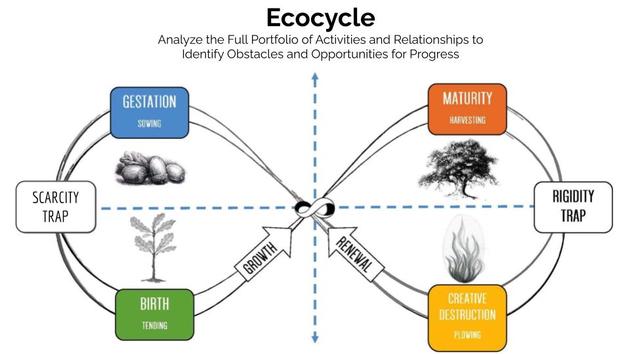
The EcoCycle structure has a clear relationship with the gardening metaphor. The four stages or quadrants to locate your initiatives, projects or relationships evoke the natural cycle of a garden:
- Gestation (sowing)
- Birth (tending)
- Maturity (harvesting)
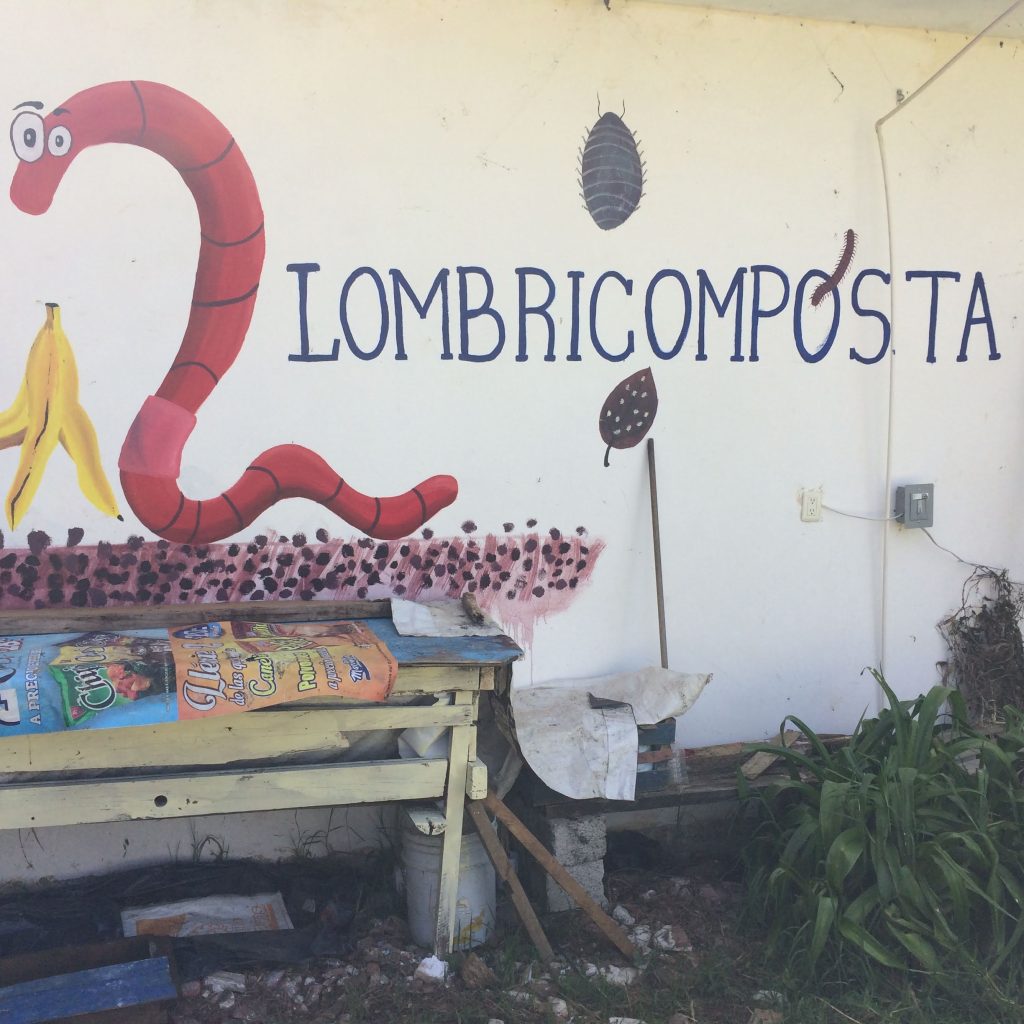
- Creative Destruction (composting)
In other words, which projects are still an idea being sowed, but haven’t sprouted yet; which projects are being implemented and we need to keep watering and weeding to cultivate their soil; which projects are starting to bare fruits to harvest; and finally which projects could be better composted to liberate resources such as time, energy and money.
There are two important considerations or “red flags” suggested in the cycle to keep an eye on:
- Scarcity Trap: On the left hand side of the cycle, between Gestation and Birth, keep a look out for the “Scarcity Trap” where we tend to lose focus or assume because an idea has been proposed or started it will grow by its own. Remember: Energy Flows Where Your Attention Goes.
- Rigidity Trap: On the other side of the cycle, between Maturity and Creative Destruction, don’t lose sight of the tendency of “not letting go” of a project or relationship that sort of works, we just are not sure of ending, but in the back of our heads we know we should end because it has outlived its purpose.
The EcoCycle is a tool to strategically focus attention where it is needed. It helps plan the next cycle. Consider it for a monthly or fortnightly exercise to review on-going and potential change projects. Looking to the past month (or three months) and towards the future deciding consciously what to move forward and what to leave to rest or compost to free energy, time and other resources.
I have used the EcoCycle in my previous companies and facilitated sessions for strategic planning workshops for local and regional NGOs, as well as community-based initiatives. In all cases the visual capturing and viewing of the projects on the flipchart or poster is valuable in itself, the conversations held with colleagues enriches the reflection and helps prioritise what is important over the urgent.
Other uses can be:
- Balancing a portfolio of strategies;
- Identifying waste and opportunities to free up resources;
- Bringing and hearing all perspectives at once;
- Creating resilience and absorbing disruptions by reorganising programs together; and
- Revealing the whole picture, the forest AND the trees.
A Natural Invitation
The article introduces EcoCycle Planning as a useful “Liberating Structure” tool for strategic planning and portfolio management. It is designed to help groups and individuals analyse their complete set of activities and relationships, identifying both stagnation and new opportunities. By mapping initiatives across four developmental stages, Gestation (sowing), Birth (tending), Maturity (harvesting), and Creative Destruction (composting), the tool provides a visual and collective perspective on what is thriving and what is draining resources. The EcoCycle encourages embracing “creative destruction” to free up energy, time, and money currently trapped in obsolete practices (the “Rigidity Trap”) and highlights the need for focused attention on new ideas to prevent them from falling into the “Scarcity Trap.” Ultimately, it fosters organisational agility, resilience, and the strategic prioritisation of resources for growth.
Use the EcoCycle as an Organisational Gardening Tool to Conduct Your Next Portfolio Review
Action: Schedule a dedicated 90-minute session this month with your core team or stakeholders to map your current projects, initiatives, and relationships using the EcoCycle Planning structure.
Objective: Visually identify which initiatives need more resources, which are ready for harvest, and, most crucially, which are ready for “composting” to intentionally free up capacity for promising new ideas.
Commitment: Consciously decide on one project to transition into Creative Destruction (composting) and one project to prioritise for immediate resource injection (tending/Birth) based on the collective insights generated.
 The Organisational Gardener
Leave a comment