
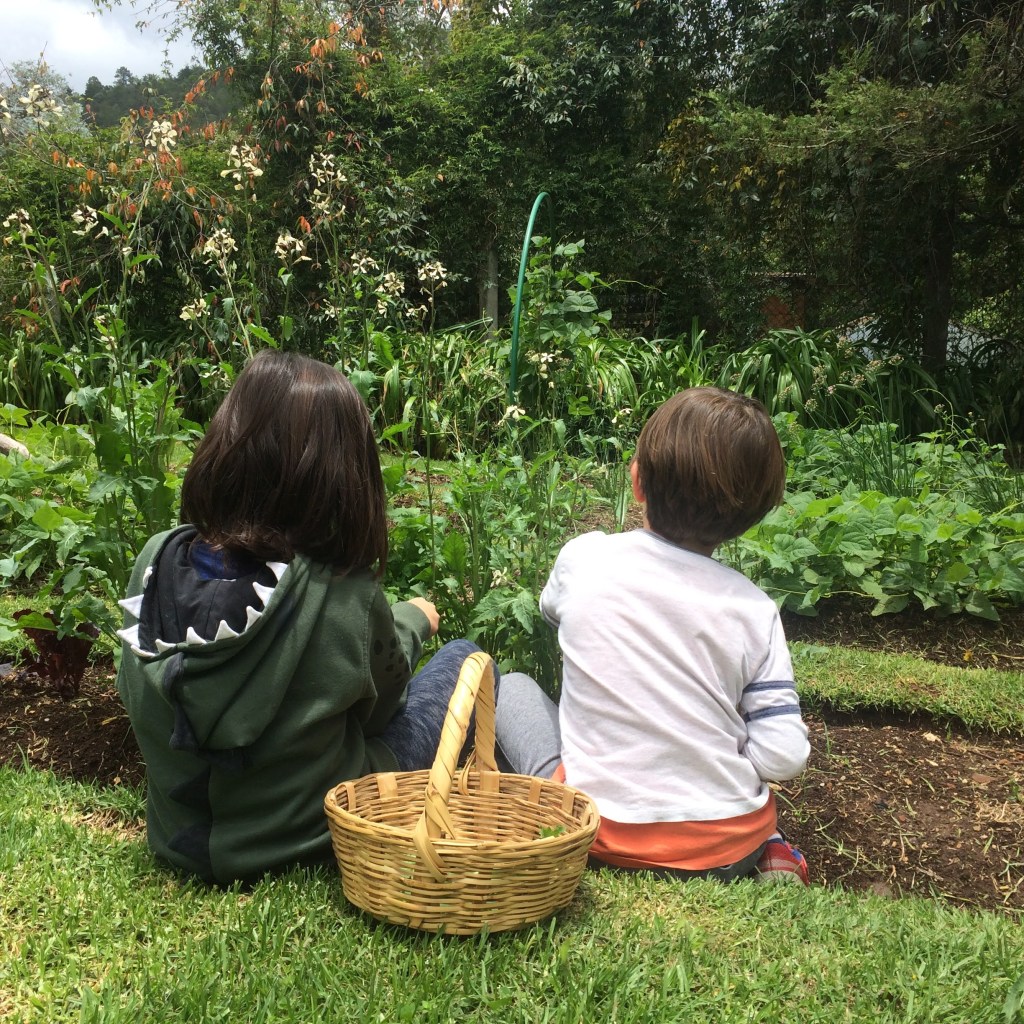
An interview in the Coaching Outdoors podcast with Peter Hawkins has made me think about the use of nature, and gardening, as a metaphor for organisational gardening and to use in coaching. Peter refers to a quote by Gregory Bateson, and suggests the following alternative “the person to reach must succeed their grasp to what is a Meta-phor”. Peter asks then “how do we see the meta we are part of?”; in this case nature. He states a concern that using nature as a metaphor is another way of “raiding nature”. This really touched me, because it felt as another “clever capitalist way” of extraction rather than reconnection. Hawkins finishes this intervention (in minute 17:23 of the interview), inviting us to “access the metaphor of nature to speak to us rather than intellectually, but as an embodied metaphor”. How can “we can feel simultaneously the path of the woodland and the path of our life”?
In this interview Peter Hawkin’s article “Let the Wider Ecology do the Coaching” is referenced and I think very appropriately to move away from the idea of nature (he calls it ecology), and in my case the garden, as solely a metaphor to a living system we humans are part of and we can connect to be coached.
Hawkins asks us to embrace coaching that mirrors nature’s processes. How can we step aside and allow the surrounding ecology to take the lead in coaching? This is bio-mimicry in action. Approach this exploration with open-hearted curiosity. Strive to be as unburdened as possible, minimising both physical luggage and mental clutter. Remain receptive to what emerges.
Gently hold the initial question: “What can the wider ecology teach me about the practice of coaching?” and allow yourself to wander and await the unexpected insights that may surface. Over time, this inquiry may naturally shift to: “How can I support the wider ecology in becoming the primary coach?” and “What adjustments do I need to make to ensure you have the necessary space to coach?”
Practices
Here are some practices suggested by Peter Hawkins to let nature coach you:
The Window
Approach the window to look out to the world and ask: What do you notice out there in the world? What calls to you or grabs your attention as you look out on the world around you?
The Pause
Half-way through a coaching walk stop and say: “Pause. Take a deep breath. Stop wherever you are and look around you? Where is beauty calling to you, or speaking to you, right now?”
The Path
Use the path to shift between three different time and space dimensions. Firstly, to call attention to what is beneath our feet and just in front of us. Then to become aware of the path opening up before us, leading us to where we will walk next. Thirdly, to look up and attend to the far horizon, and notice what weather is heading our way.
The Rhythms
Go outside, but this time alert to as many different time rhythms you detect on your walk. Having completed this exploration, carry out a coaching session and explore how many rhythms you can discover in the coachee’s stories and in the unfolding relationship between you and all that surrounds us.
Interdependence
As coaches, we accompany our coachees, gently bringing forth their innate curiosity and exploring the connections they observe around them. From there, we can delve into the connections within them, and finally, the interplay between the two. When starting with a new coachee, you might try posing transpersonal psychologist Piero Ferrucci’s cherished question: “What makes your heart sing?”
Opening the Seven Levels
Since every coaching session is a kind of rite of passage, coaches can adopt this practice before each meeting. Visualise the individual, their key relationships, the community they mention, and the one they omit. Expand this visualisation to include the entire human family, the broader, more-than-human ecology, and the essential mystery of oneness.
Natural Invitation
The piece explores the concept of shifting the relationship between nature and coaching from a simple “metaphor” to a deeper “Meta-phor,” inspired by Peter Hawkins’ work on ecological coaching. It challenges the conventional view of nature as a resource for extraction or mere analogy (organisational gardening), urging coaches instead to see it as a living system and a primary coach (“Let the Wider Ecology do the Coaching”). This requires an embodied connection, allowing nature’s processes and rhythms to guide and inform the coaching practice, moving beyond intellectual analysis to a felt sense of interdependence.
The call to action is to intentionally integrate Hawkins’ “Practices” (The Window, The Pause, The Path, The Rhythms, Interdependence, Opening the Seven Levels) into your coaching engagements, stepping aside to allow the natural world to become an active, embodied, and transformative coaching presence for both yourself and your coachees.
 The Organisational Gardener
Leave a comment