
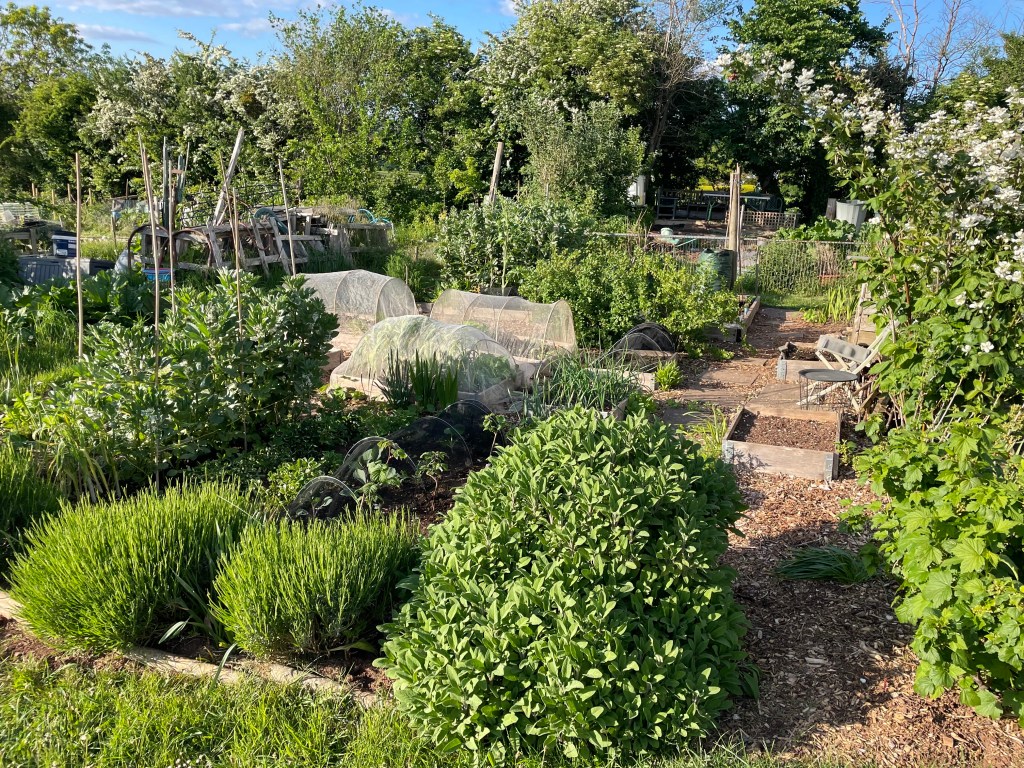
Post written in June 23, 2025 for my Organisational Gardening newsletter
If you’ve spent time in any garden, you’ll know that not every plant grows as expected. Sometimes there are signs that the soil is too dry, a root is crowded, or something unseen is taking energy away. In the same way, within teams and organisations, we experience tensions, not as problems to fear, but as signals from the system that something wants to shift.
Introduction to Tensions
The first time I encountered the concept of “tensions” was while studying and training in #Holacracy as a practitioner and a coach in 2018. In this self-management operating system a tension is “the feeling you get when you sense a gap between what is and what could be” (Cowan, 2018).
It sounded so logical; everyone in an organisation sensing how things worked and proposing ways to improve it continuously. It could be an operational tension (regarding the work to be done) or a governance tension (how the work was done). In the training they also spoke about human dynamics (individual or group-wise), but Holacracy didn’t have an answer or process for those inter-personal tensions.
One could stay Holacracy stays on the field level of the company (mainly in the dimensions of structure, authority and meetings).
In my case, through the exploration of other frameworks, practices and tools related to self-management the word “tension” kept appearing. Sometimes referencing Holacracy, and others applying dictionary definitions such as:
- Inner striving, unrest, or imbalance often with physiological indication of emotion.
- A state of latent hostility or opposition between individuals or groups.
- A balance maintained in an artistic work between opposing forces or elements.
Some of the places I have heard the word tension being used as the starting point for improving the way of working of an organisation or initiative have been:
- The use of the Operating System Canvas by Aaron Dignan in his book Brave New Work; and
- Recently, in the process of Creative Field Mapping.
While writing these lines I remembered the concept of Design Thinking and one of the its most expert and famous proponents: IDEO. They have applied this problem-solving approach to almost any challenge and new application possible, including organisational design.
Design thinking is a human-centred approach to innovation that draws from the designer’s toolkit to integrate the needs of people, the possibilities of technology, and the requirements for business success. Tim Brown, Executive Chair of IDEO
Let’s walk through the common ground and subtle differences in how these practices work with tensions and what we might learn for our own organisational gardens.
🌼 Common Ground: How These Frameworks Honour Tension
🪻 Tension as a sign of life In all four approaches, tension is seen not as a weed to be pulled out but as a natural symptom of growth. It tells us where the ecosystem is misaligned or under strain.
🧭 Surfacing what’s below the surface Whether through reflection, observation, or structured dialogue, these approaches encourage us to name what is felt. The gardener notices signs of distress before the plant withers. In the same way, we are invited to listen deeply to the lived experience of teams and individuals, and bring those insights into the light.
🌱 Experimenting with care Each method believes in small experiments over large-scale interventions. Like adjusting water or compost levels before replanting, we try new roles, rhythms, prototypes, or agreements and watch what grows. Learning comes not only from ideas, but from what happens when we try something new in real conditions.
🌳 Four Approaches, Four Perspectives
🌿 In Brave New Work, Aaron Dignan speaks of tensions as signals within the system’s “Operating System” — how it governs, plans, decides, and communicates. Here, tending tensions means naming constraints that no longer serve and making space for the team to plant something new together.
🌾 Creative Field Mapping brings a source-based lens to the garden. It notices when a part of the field has become neglected; such as when a source has left, someone is carrying something they do not truly want to, or two people are pulling in different directions. These tensions are honoured, not fixed. Sometimes the answer is to let go and compost an initiative. Sometimes it is to pass the seed (idea) to someone who wants to carry it forward.
🌻 Holacracy offers a clear trellis for the climbing vine. Tensions are brought into structured meetings, where any team member can raise an issue and propose a change. There is beauty in this clarity: everyone has the authority to notice what needs adjusting in their patch of the garden, and a path to act on it. No need to ask for permission to weed or water.
🌸 Design Thinking (IDEO) IDEO doesn’t speak of tensions directly, but the practice begins with empathy — listening deeply to unmet human needs and hidden frictions. It is outward-facing, starting not with the internal system but with the people we serve. It invites us to see through others’ eyes, to test new ideas gently, and to iterate based on feedback from the field.
🌾 Tensions as Opportunities of Growth
However you choose to engage with tension — through structured governance, team dialogue, or empathic inquiry — the lesson is the same: tension is an opportunity. It holds the potential to fertilise the next season of growth. Ignored, it hardens into resistance. Worked with, it opens new possibility.
🍂 Reflection Prompt Which parts of your team or organisation feel overgrown, undernourished, or in conflict? What would happen if you stopped trying to fix it and started to listen first?
 The Organisational Gardener
Leave a comment